Chonggak Hanwoo — D2C Commerce
A production D2C storefront and back-office a tiny, non-technical team can actually run.
Solo Full-Stack Engineer · Independent
The problem
A hanwoo (Korean beef) seller wanted to go direct-to-consumer, but a real D2C operation means payments, inventory, orders, delivery, and customer notifications — usually a whole team's worth of tooling. The business had none of it and no engineering staff.
Goal & constraints
Independently ship a production-ready storefront plus the back-office tooling a non-technical owner could operate day to day, without a team.
Key decisions
Integrate Toss Payments and Kakao AlimTalk instead of rolling custom payment/notification flows.
In the Korean market these are the rails customers already trust. Leaning on them cut compliance and delivery-notification risk and freed engineering time for the parts that were actually differentiated.
Build a custom admin dashboard rather than use an off-the-shelf commerce backend.
Inventory, orders, and delivery were tightly coupled to how this specific business worked. A tailored dashboard let the owner run operations without me in the loop.
Add Redis and CDN caching on top of Prisma/RDS.
Storefront reads dominated traffic. Caching them kept the site fast and the database cheap under launch-day load.
How I built it
Storefront
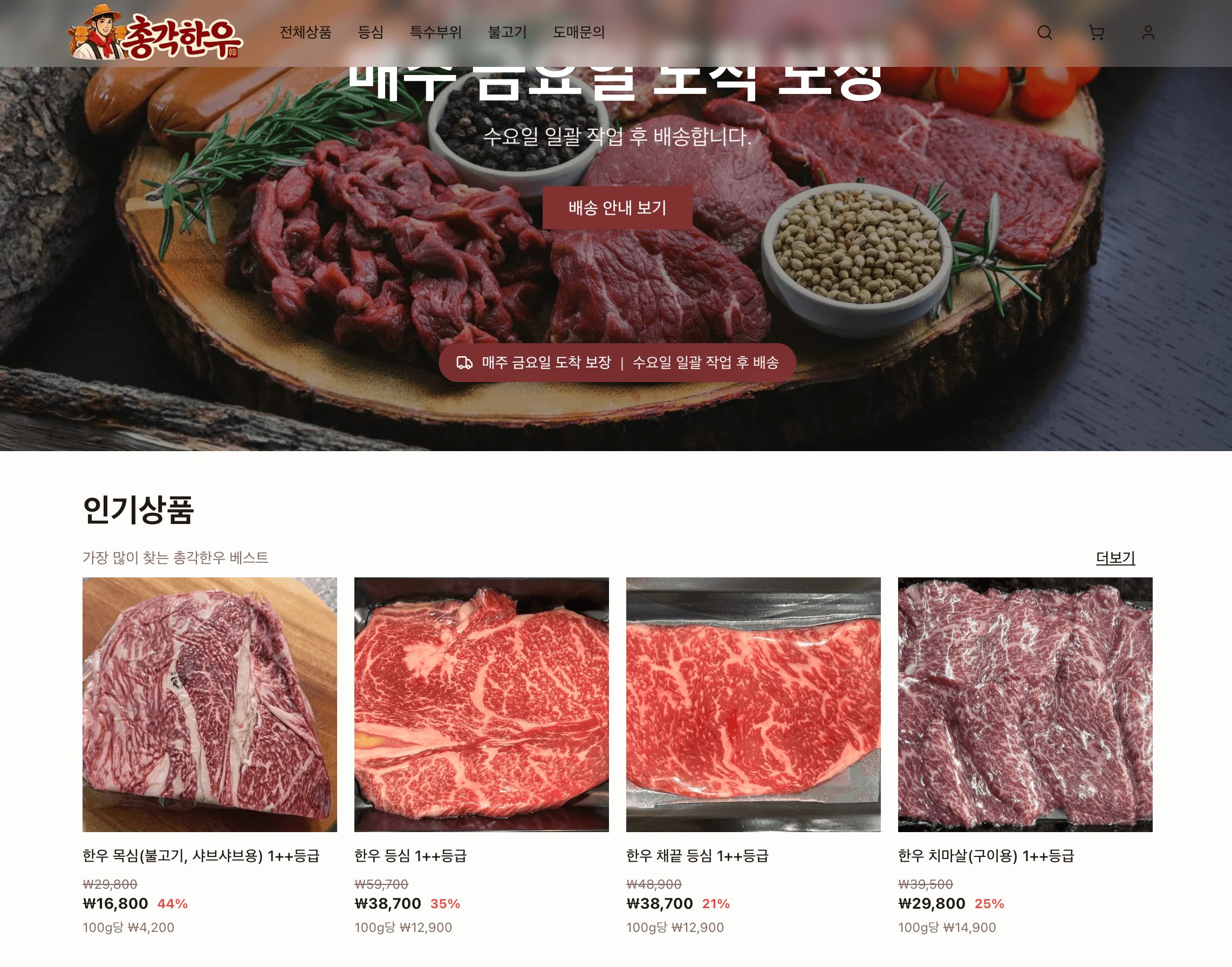
Designed and built the customer-facing D2C store on Next.js with Prisma and AWS RDS for reliable data, plus Redis and CDN caching for performance.
Payments & notifications
Integrated Toss Payments for checkout and Kakao AlimTalk for order and delivery updates.
Operations dashboard
Built a custom admin for inventory, order, and delivery management so the owner could operate the business independently.
Outcome
The store launched and generated over ₩7.5M in revenue in its first month — validating both the product and the operability of the ops tooling.
What I took away
- Choosing boring, trusted infrastructure for payments freed my budget of attention for what made the business unique.
- The admin dashboard mattered as much as the storefront — shipping software someone else can operate is a different bar than shipping a demo.